Feeling buried under a mountain of notifications? Constantly pulling out your phone, lured by the siren song of apps, only to find yourself hopelessly sidetracked? We live in an age of relentless connectivity, where demands on our attention are constant and productivity often feels like a distant dream. But what if the key to reclaiming your focus was right there, strapped to your wrist?
Smartwatches, once novelties, are quietly evolving into powerful productivity partners. They’re no longer just about telling time; they’re about managing it, keeping you informed, and, surprisingly, even promoting better health. These tiny tech titans promise to boost your output, but where did they come from, and are they all hype or genuinely helpful? Let’s delve into the world of wrist-worn wonders, examining their potential, their pitfalls, and what the future holds. And, of course, we’ll shine a spotlight on the new Samsung Galaxy Watch 8 series, a frontrunner in this productivity revolution.
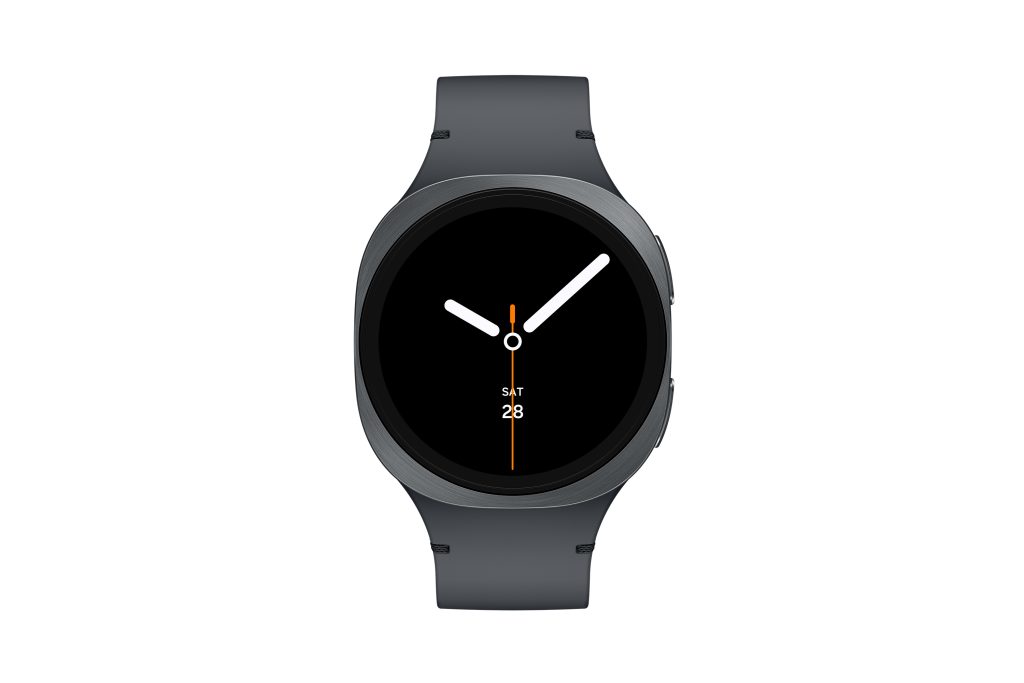
Samsung Galaxy Watch 8 (2025) 40mm
From Pagers to Powerhouses: A Whistle-Stop Tour Through Smartwatch History
To truly appreciate the modern smartwatch, we must acknowledge its lineage. It’s more than just a shiny new gadget; it’s the culmination of decades of innovation. Think of it as a technological echo resonating from the past.
The story begins with the pioneers. In the 1970s, the Pulsar watch, with its futuristic LED display, revolutionized how we perceived time. Then came Seiko, boldly venturing into “computer on your wrist” territory with the Data 2000 and the RC-1000, the first watch compatible with personal computers. Timex, in collaboration with NASA, developed the Datalink, allowing users to sync information from their PCs – long before it was fashionable. Let’s not forget Samsung’s early foray with the SPH-WP10, a “watch phone” that turned your wrist into a communication device, however clunky it may have been.
The 2000s saw further experimentation. IBM’s WatchPad hinted at deeper integration, while Microsoft’s SPOT (Smart Personal Object Technology) leveraged FM radio to deliver internet updates. These were all pieces of the puzzle, experiments in search of the right formula.
The modern era, ushered in by the 2010s, witnessed the smartwatch’s true ascent. Pebble’s Kickstarter success proved that consumers were hungry for a device that went beyond basic timekeeping. Then, the Apple Watch arrived, catapulting the smartwatch into the mainstream and setting new standards for design and functionality. Key advancements like LTE connectivity (offering phone-free operation) and health features like ECG and blood oxygen monitoring further solidified the smartwatch’s place in our lives.
Samsung Galaxy Watch 8 (2025) 40mm
Your Personal Productivity Power-Up: How Smartwatches Deliver (and Why the Galaxy Watch 8 Shines)
So, how exactly does a smartwatch boost productivity? The answer lies in its ability to streamline information, minimize distractions, and promote healthier habits.
Consider the constant barrage of notifications we face daily. A smartwatch, like the Galaxy Watch 8, helps tame this notification beast. Instead of reaching for your phone every time it buzzes, you can glance at your wrist to see if an alert is truly urgent, leaving your phone safely tucked away. This simple act can significantly reduce the “phone trap” – the endless scrolling and app-hopping that derail our focus.
Beyond notifications, smartwatches offer on-demand assistance. Calendar reminders, to-do lists, and meeting alerts are all readily accessible. The Galaxy Watch 8 takes this a step further with its integration of Gemini AI, allowing you to jot down quick notes, set alarms, and manage tasks using just your voice. It’s hands-free magic that keeps you in the flow.
Seamless communication is another key benefit. Answering calls discreetly from your wrist is invaluable during meetings or while driving. Quick replies to texts and emails allow you to maintain communication without completely interrupting your workflow.
Perhaps one of the most compelling aspects of smartwatches is the health-productivity loop. A healthier you is undoubtedly a more productive you. The Galaxy Watch 8, for example, excels in this area. Sleep tracking helps you optimize your rest for peak performance, aided by Bedtime Guidance and even whimsical Sleep Animal Symbols! Built-in stress management tools encourage mindfulness and breaks. Activity tracking motivates you to stay active and energized throughout the day, further enhanced by the Galaxy Watch 8’s AI-powered running coach, Antioxidant Index, and Vascular Load tracking for a more holistic approach to well-being.
The Samsung Galaxy Watch 8 stands out with its new “cushion” design, a brighter 3,000-nit display for enhanced visibility, and a powerful 3nm Exynos W1000 chipset that ensures fluid and responsive interactions. These features combine to create a seamless and intuitive user experience.
The Double-Edged Sword: Smartwatch Controversies and Downsides
However, the smartwatch isn’t a perfect productivity panacea. It’s crucial to acknowledge the potential downsides.
The very feature that makes smartwatches appealing – notifications – can also be a source of distraction. Are we simply trading one screen for another, experiencing “notifications on steroids” that constantly pull us away from our tasks? Some studies even suggest that checking a smartwatch while driving can be more distracting than using a phone. Digital fatigue, caused by an overload of information and constant connectivity, is another valid concern.
Privacy is another critical issue. Smartwatches collect a wealth of sensitive data, including health metrics, biometric information, and location data. Who has access to this data, and how is it being used? Concerns about third-party sharing for targeted advertising or profiling are legitimate. Moreover, smartwatches, like any connected device, are vulnerable to security breaches and unauthorized access.
Battery life remains a persistent challenge. The need for daily charging is a far cry from the longevity of traditional watches. Furthermore, some users question whether smartwatches are truly necessary, arguing that they simply duplicate smartphone features on a smaller screen. The cost-benefit ratio is another point of contention, with some questioning whether the premium prices of high-end smartwatches are justified by their functionality.
Finally, the accuracy of health data collected by smartwatches is often under scrutiny. Constant monitoring can lead to health anxiety, and some metrics, such as calories burned and stress levels, may be inaccurate. The FDA has also issued warnings about unapproved claims, particularly regarding non-invasive blood glucose monitoring, which no currently approved smartwatches can reliably perform.
Glimpse into Tomorrow: What’s Next for Your Smart Wrist?
Despite these challenges, the future of smartwatches is bright. Innovation continues at a rapid pace, promising even greater productivity and health benefits.
We can expect to see AI taking the wheel (even more!). Hyper-personalized coaching, with AI learning your routines, predicting your needs, and optimizing your schedules, is on the horizon. Proactive health monitoring, with early disease detection capabilities and “edge computing” for enhanced speed and privacy, will become increasingly common.
Beyond the screen, we can anticipate more immersive interactions. Flexible displays that wrap around your wrist are a distinct possibility. Augmented Reality (AR) could overlay digital information onto the real world, transforming how we interact with our environment. Gesture control could allow us to interact with our smartwatches without even touching the screen.
Health tracking will gain superpowers. Clinical-grade sensors for blood pressure, advanced glucose monitoring (once approved), and sweat analysis for hydration and fatigue levels will become standard. Seamless integration with healthcare systems will further enhance the value of smartwatches for managing our health.
Untethered and unified experiences are also on the horizon. Longer battery life, thanks to technologies like solid-state batteries and solar charging, will reduce the need for frequent charging. 5G connectivity will enable true smartphone independence. Smartwatches could even become smart home command centers, allowing us to control our environment from our wrists.
The smartwatch market is poised for continued rapid growth, evolving from a mere convenience to an indispensable hub for health and productivity.
Conclusion: The Smartwatch Revolution – Worth the Hype?
Smartwatches have indeed come a long way, offering undeniable benefits for managing our day, staying connected, and improving our well-being.
It’s important to acknowledge the potential for distraction and the valid privacy concerns. However, smart technology is constantly evolving, addressing these issues and improving its overall value.
The bottom line is this: For many, the advantages of a smartwatch, especially leading models like the Samsung Galaxy Watch 8 with its cutting-edge AI and health features, outweigh the drawbacks. It’s a genuine tool for boosting productivity and enhancing overall quality of life.
Are you ready to harness the power of your wrist and truly supercharge your day? The right smartwatch might just be the secret weapon you’ve been looking for.
Samsung Galaxy Watch 8 (2025) 40mm