It’s the tech world’s equivalent of a heavyweight title fight: Apple versus Samsung.
For years, Apple has reigned supreme in the smartwatch arena, a polished champion seemingly untouchable. But Samsung, never one to back down from a challenge, has entered the ring with the Galaxy Watch 8 series, ready to rumble. This isn’t just about incremental improvements; it’s about a calculated assault, a strategic move to carve out a distinct and perhaps dominant position. Could the Galaxy Watch 8 be the device that finally dethrones the king? Let’s ponder.
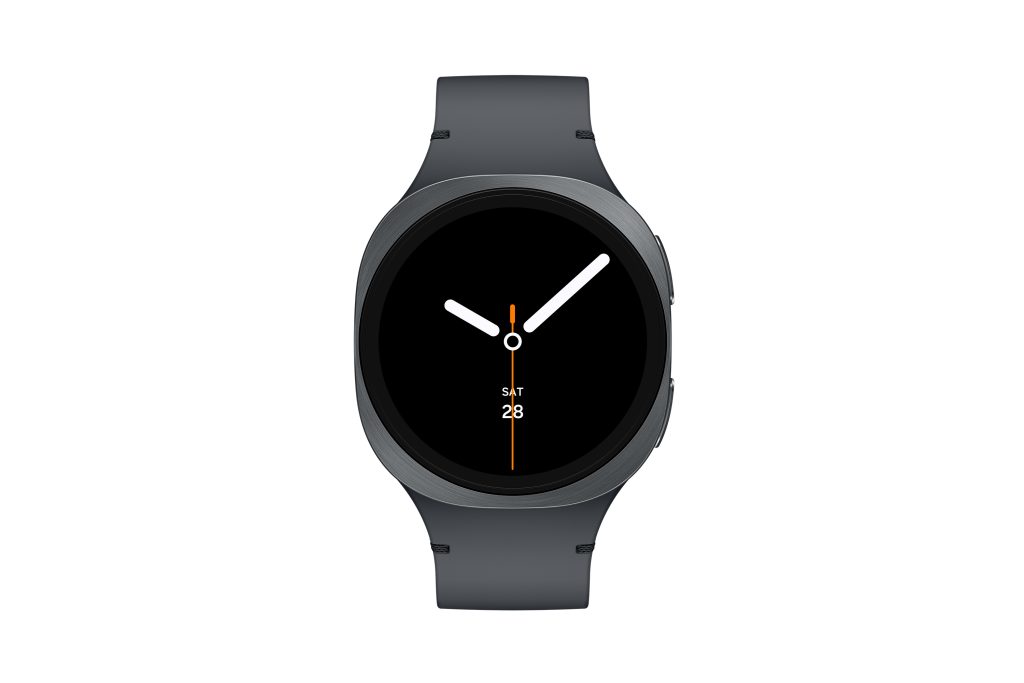
Samsung Galaxy Watch 8 (2025) 40mm
A Brief History Lesson: From Quirky Gadgets to Wrist Powerhouses
Do you remember the early days of smartwatches? Clunky, somewhat awkward devices that promised much but delivered little. Both Apple and Samsung have been instrumental in transforming these nascent gadgets into the sophisticated wrist companions we know today.
- Apple’s Meteoric Rise: The arrival of the Apple Watch in 2015 felt like a seismic event. It wasn’t just a smartwatch; it became the smartwatch. With each iteration, Apple refined its offering, adding features like GPS, cellular connectivity, and the now-iconic ECG. And with the introduction of the super-rugged Ultra, Apple proved that a tech device could be both functional and a fashion statement, even cannibalizing the traditional Swiss watch market in the process. A remarkable feat, wouldn’t you agree?
- Samsung’s Persistent Pursuit: Samsung’s journey, however, began even earlier, with the Gear series in 2013. A notable early innovation was the rotating bezel, a feature beloved by many and a testament to Samsung’s willingness to experiment. The true turning point came in 2021 with the Galaxy Watch 4, a pivotal collaboration with Google that brought Wear OS into the fold. This infusion of Google’s software expertise supercharged Samsung’s app ecosystem and fueled a significant surge in market share, laying the groundwork for the formidable devices we see today. A persistent climb, fueled by innovation and a strategic partnership.
The Main Event: Galaxy Watch 8 vs. Apple Watch 10 – Who Wears the Crown?
The contenders are ready. In one corner, we have the Galaxy Watch 8 series – including the refined Watch 8, the classic Watch 8 Classic (with that returning bezel!), and the robust Watch Ultra 2025. In the other corner, the Apple Watch Series 10 and Ultra 2, representing Apple’s continued evolution. The tension is palpable; let the games begin.
Round 1: Health & Wellness – Samsung’s Deep Dive
This is where Samsung seems to be placing its bets, leaning heavily into a suite of health features that extend far beyond basic step counting.
- Galaxy’s Health Edge: Imagine the ability to track your blood pressure directly from your wrist (provided you’re tethered to a Samsung phone, of course). Now, add body composition analysis (BIA), offering insights into your muscle mass, fat percentage, and more. But it doesn’t stop there. Samsung goes further with incredibly detailed, AI-powered sleep coaching, complete with snoring detection and even assigning you a “sleep animal” based on your sleep patterns. And for those concerned with metabolic wellness, there’s the Advanced Glycation End Products (AGEs) index. The Watch Ultra 2025 takes things even further, boasting a remarkable 13 LEDs for enhanced accuracy. Samsung is not just passively monitoring your health; it’s actively providing deep, actionable insights that could empower users to make more informed decisions about their well-being. A data-driven approach to wellness, wouldn’t you say?
- Apple’s Strong Suite: The Apple Watch Series 10 counters with its own impressive arsenal of health tech, including new sleep apnea detection, ECG, heart rate monitoring, and practical water temperature/depth sensors. While undeniably robust and dependable, Apple’s approach feels… perhaps less adventurous than Samsung’s. It’s a solid foundation, but is it enough to compete with Samsung’s more personalized, data-rich approach?
Round 2: Design & Experience – Circular vs. Square (and that rotating bezel!)
Ah, the age-old debate: form versus function, aesthetic preference versus practical utility.
- Galaxy’s Choice: Samsung offers a wider range of aesthetic choices, a recognition that one size does not fit all. While the new Galaxy Watch Ultra (and potentially the standard Watch 8 series) experiments with a “squircle” design, the Galaxy Watch 8 Classic makes a triumphant return of the beloved physical rotating bezel – a tactile delight for many users. There’s something undeniably satisfying about the physical click of the bezel as you navigate the interface, a tangible connection to the device that’s often missing in the cold, sterile world of touchscreens. Plus, the Ultra ventures into more adventurous color palettes, adding a touch of personality.
- Apple’s Iconic Look: The Apple Watch Series 10 refines its signature square design, making it thinner and larger, a subtle evolution of a familiar form. It’s undeniably premium and polished, exuding a sense of understated elegance. But for those who yearn for a more traditional watch aesthetic or a more tactile method of interaction, Apple’s design can feel somewhat… predictable.
Performance & UI: Apple has long been praised for its buttery-smooth performance, a hallmark of its tightly integrated hardware and software ecosystem. However, the Galaxy Watch 8 series aims to close that gap with its new 3nm Exynos W1000 chip and One UI 8 (based on Wear OS 6), infused with the intelligence of Gemini AI. This combination promises a faster, more responsive, and genuinely smarter experience. Could this be the year that Samsung finally matches, or even surpasses, Apple in terms of overall performance and user interface? The potential is certainly there.
Samsung Galaxy Watch 8 (2025) 40mm
Round 3: Battery Life & The Rugged Frontier – Going the Distance
For adventurers, explorers, and simply those who prefer not to be tethered to a charger, battery life is a critical consideration.
- Galaxy’s Staying Power: The Galaxy Watch Ultra (2025) emerges as a battery life champion, boasting up to a remarkable 100 hours in power-saving mode and a respectable 60 hours with normal use. That’s a significant advantage over the Apple Watch Ultra 2, which typically offers around 36 hours (or 60 in low power mode). For those long weekends in the wilderness or those intense expeditions, Samsung could prove to be a more reliable and enduring companion. A true test of endurance, wouldn’t you agree?
- Durability Face-off: Both Ultra models are built to withstand the rigors of the outdoors, crafted from durable materials like titanium and shielded by sapphire glass. The Apple Watch Ultra 2 does boast an official dive computer certification, but Samsung’s Ultra (2025) is also engineered to endure extreme conditions. A battle of robustness, each vying to be the ultimate adventure companion.
Round 4: Ecosystem & Value – The Android Advantage
The ecosystem, the interconnected web of devices and services, often dictates the user experience and the overall value proposition.
- Galaxy’s Broad Appeal: The Galaxy Watch series seamlessly integrates with Android phones, unlocking its full potential, especially within the Samsung ecosystem. This broader compatibility, coupled with a generally more affordable price point, makes it an accessible and high-value option for a significant segment of the market. An open invitation to the Android world.
- Apple’s Exclusive Club: The Apple Watch, while offering unmatched integration within the iOS ecosystem, remains firmly within Apple’s “walled garden,” strictly limited to iPhone users. This exclusivity limits its audience, and its premium features often come with a premium price tag. An exclusive club with a high barrier to entry.
The Elephant in the Room: Smartwatch Scrutiny
No tech giant is immune to criticism, and both Samsung and Apple have faced their share of scrutiny.
- Samsung’s Recent Hiccups: The Galaxy Watch 7 and 2024 Ultra, in their early days, encountered battery drain complaints, a challenge that Samsung has acknowledged and is addressing through software updates. New sensor designs on the Watch 7/8 series have also led to wireless charging issues, making reverse wireless charging from phones unreliable. Past inconsistencies in health tracking accuracy (GPS, HR, BP calibration) have also raised concerns, as has the frustrating limitation of many advanced health features being locked to Samsung phones. The “squircle” design has drawn comparisons to Apple, and reports of the Watch 8 Classic being “top-heavy” have raised questions about its overall comfort and balance.
- Apple’s Legal Battles & Limitations: Apple has been embroiled in a significant patent dispute with Masimo over its blood oxygen sensor, resulting in temporary sales bans and feature redesigns. Battery life remains a persistent complaint for many users, who still find themselves reaching for the charger daily. The lack of significant design evolution for the main Series has also been a point of contention, along with its unwavering iOS-only compatibility. A reminder that even the giants are not immune to challenges and imperfections.
Looking Ahead: What’s Next for Our Wrists?
The future of smartwatches is brimming with possibilities, fueled by advancements in AI, sensor technology, and materials science.
- Galaxy’s Crystal Ball: Expect even deeper AI integration with Gemini on the Watch 8, enabling more complex, multi-step commands and personalized insights. Samsung is pushing forward with new health metrics like Vascular Load and Antioxidant Index, and the tantalizing prospect of non-invasive blood glucose monitoring remains on the horizon (though likely several years away). Rumors also suggest even brighter Micro-LED displays and the continued embrace of the physical rotating bezel for Classic models.
- Apple’s Future Vision: The Apple Watch Series 11 (2025) is anticipated to incorporate blood pressure monitoring (with hypertension alerts) and 5G RedCap connectivity. The Ultra 3 (2025) may introduce satellite connectivity for off-grid communication. Further down the line, the Series 12 (2026) is rumored to undergo a significant redesign, feature an all-new CPU, incorporate doubled sensors for enhanced accuracy, and potentially even introduce Touch ID for added security. Long-term, Apple also has its sights set on non-invasive blood glucose monitoring.
The Verdict: Does the Galaxy Watch 8 Truly Have the Edge?
For a long time, the Apple Watch was the undisputed champion, a symbol of innovation and seamless integration. But with the Galaxy Watch 8 series, Samsung is not merely playing catch-up; it’s actively forging its own path, defining its own unique value proposition.
If you’re an Android user, particularly one already immersed in the Samsung ecosystem, the Galaxy Watch 8, 8 Classic, or Ultra (2025) presents a highly compelling argument. Its emphasis on advanced, holistic health tracking (blood pressure, body composition, intricate sleep insights), combined with the superior battery life of the Ultra model, diverse design choices (that physical rotating bezel!), and its generally more accessible price point, provides it with a distinct advantage.
While Apple continues to excel in its polished iOS integration and extensive app library, Samsung’s aggressive innovation in AI and health monitoring, tailored for the Android world, positions the Galaxy Watch 8 series not just as an alternative but as a powerful statement, ready to lead. For many, that is a clear edge worth strapping on. The question remains: will the world agree? Only time will tell.
Samsung Galaxy Watch 8 (2025) 40mm